Hugo Vogel · 11 September 2026
Mapping the Lifecycle of Lumber in Public Park Renovations Across North American Towns
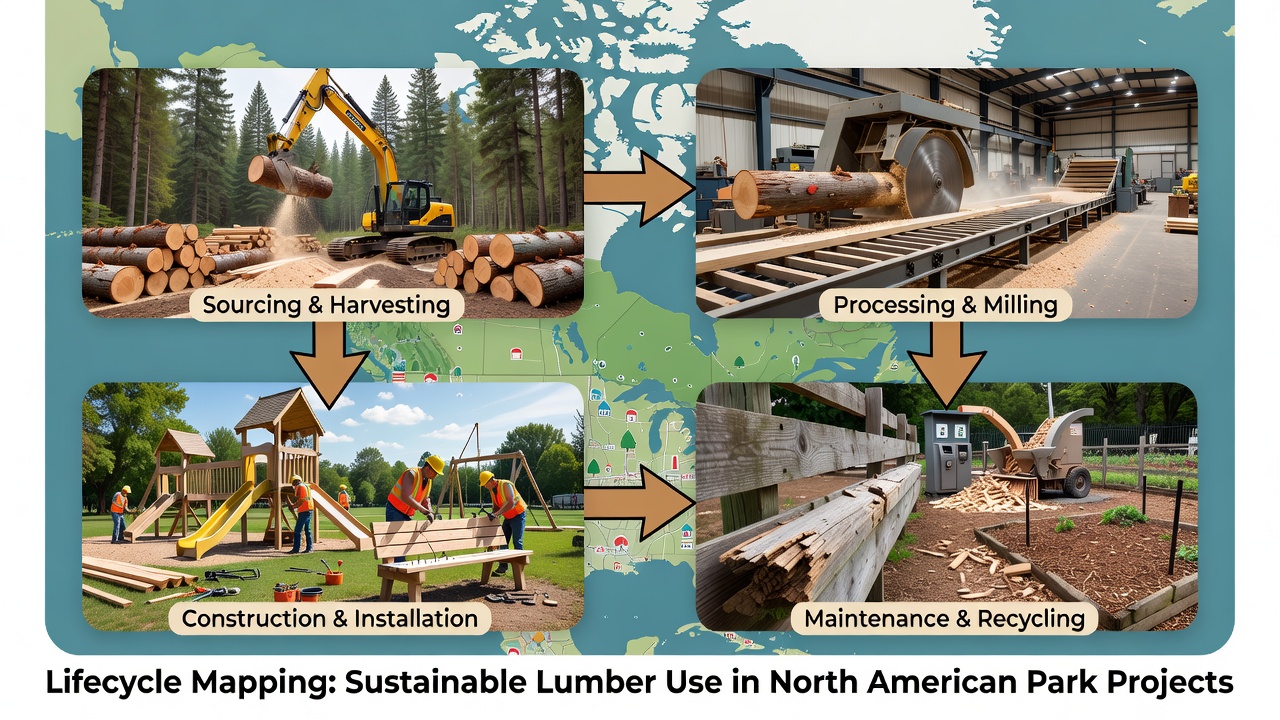
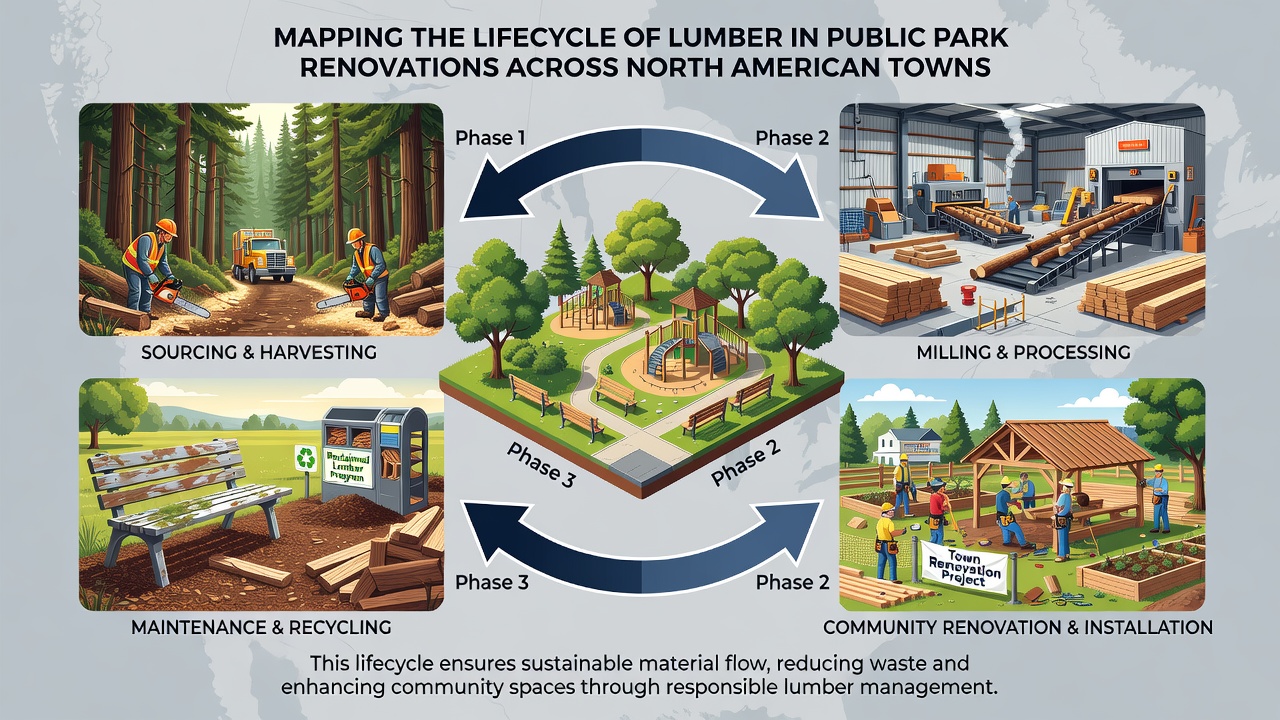
Towns across North America track lumber through its full lifecycle during public park renovations, beginning with forest harvesting and extending through milling, treatment, installation, ongoing maintenance, and eventual reuse or disposal, while data from regional forestry agencies indicate these steps follow consistent patterns shaped by local regulations and material standards.
Sourcing and Harvesting Practices
Forestry operations in regions such as the Pacific Northwest and the Canadian boreal forests supply much of the lumber used in these projects, and studies from Natural Resources Canada show that certified sustainable harvesting accounts for a growing share of supply chains feeding municipal contracts. Harvest crews select species like Douglas fir and eastern white pine based on durability requirements for outdoor exposure, after which logs move to regional mills for initial processing into dimensional lumber or timbers. Towns coordinate with suppliers to match volume needs for elements such as playground equipment, boardwalks, and fencing, and records from multiple municipalities reveal that advance ordering often occurs 12 to 18 months before ground-breaking to account for seasoning periods.
Processing, Treatment, and Transportation
Mills kiln-dry and grade the wood before applying preservatives suited to ground-contact or above-ground applications, with treatment facilities in both the United States and Canada following standards that limit chemical leaching into soil and water. Once processed, shipments travel by truck or rail to staging yards near renovation sites, and logistics data collected by state transportation departments indicate average delivery distances of 300 to 800 kilometers for many mid-sized towns. In September 2026 several communities in the Midwest and Ontario plan to incorporate RFID-tagged batches that allow project managers to verify origin and treatment records at each handover point.
Installation in Renovation Projects
Crews install treated lumber for seating, shade structures, and edging once site preparation concludes, and municipal engineering reports document that pressure-treated southern yellow pine remains common in southern states while cedar and redwood see wider use in western and coastal areas. Installation crews follow detailed plans that specify fastener types and spacing to meet load requirements, and inspectors verify compliance before public access resumes. Towns in British Columbia and Washington State have adopted modular designs that allow future disassembly without cutting, which simplifies later phases of the lifecycle according to project summaries released by local public works departments.
Maintenance Cycles and Performance Monitoring
Regular inspections identify weathering, insect damage, and structural wear, and maintenance crews apply sealants or perform minor replacements on schedules that range from annual to every five years depending on climate exposure. Data compiled by the USDA Forest Service reveal that properly treated lumber in temperate zones retains structural integrity for 15 to 25 years before major interventions become necessary. Some municipalities now integrate moisture sensors and visual mapping tools to predict replacement needs earlier, reducing unplanned closures of park amenities.
End-of-Life Management and Material Recovery
When lumber reaches the end of its service life, crews remove and sort pieces for reuse, recycling into mulch or particleboard, or disposal in approved landfills, while regional waste-management studies show recovery rates exceeding 60 percent in several provinces and states with active wood-recycling programs. Salvaged timbers sometimes reappear in smaller community projects or are chipped for playground surfacing, and traceability systems help document these flows so that future renovation budgets can credit recovered material volumes. Towns continue to refine these processes as updated forestry and waste regulations take effect across North America.
Conclusion
The lifecycle mapping process gives towns measurable data on material flows that support budgeting, regulatory compliance, and resource planning for successive park renovations, and continued coordination among forestry agencies, mills, and municipal departments sustains these tracking efforts.