Blake Sullivan · 25 September 2026
Timber Certification Trends Shaping Municipal Construction Decisions in Growing Suburbs
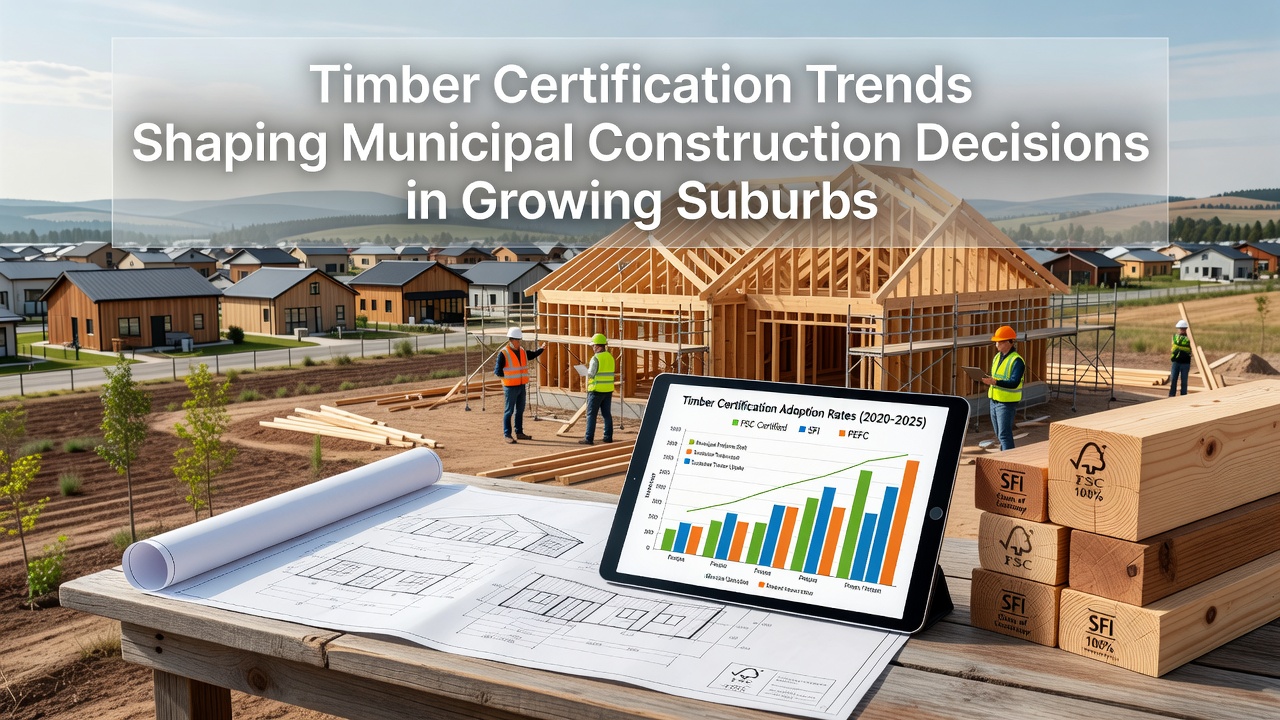
Timber certification has gained traction among municipalities in expanding suburban areas where new housing developments, schools, and community centers require large volumes of wood products that meet verified environmental and sourcing standards. Growing suburbs often face pressure to balance rapid construction timelines with requirements for sustainable materials, and certification programs such as those administered by the Forest Stewardship Council and the Programme for the Endorsement of Forest Certification provide documented chains of custody that local governments reference when awarding contracts. Data from industry tracking services show rising adoption rates in North American and European suburban projects between 2023 and 2025, with further acceleration expected as updated procurement guidelines take effect in September 2026.
Certification Programs and Their Adoption Patterns
Observers note that municipalities increasingly specify certified timber because these labels demonstrate compliance with broader environmental targets set by regional authorities. In Canadian suburbs near major metropolitan centers, for instance, planners reference reports from Natural Resources Canada that track certified wood volumes in public infrastructure bids. Similar patterns appear in Australian regional councils that align local building codes with national forestry standards. Certification systems verify that timber originates from responsibly managed forests, includes chain-of-custody documentation, and avoids illegal logging sources, all of which factor into municipal tender evaluations.
Suburban construction schedules often incorporate these requirements early in the planning phase so that suppliers can confirm availability and pricing. Research indicates that projects using certified materials encounter fewer delays related to regulatory reviews, since documentation satisfies multiple overlapping environmental ordinances at once. Those who manage procurement for growing communities report that certified timber now appears in specifications for everything from framing lumber to exterior cladding on new municipal facilities.
Influence on Local Decision-Making Processes
Suburban municipalities evaluate bids not only on cost but also on the presence of valid certification documentation that aligns with long-term climate commitments. Figures from municipal association surveys reveal that councils in mid-sized suburbs allocate higher portions of capital budgets to certified products when grant programs reward verified sourcing. This shift affects supplier selection, because contractors must demonstrate access to certified inventories rather than relying solely on price competition. What's interesting is how these requirements interact with suburban growth rates, since faster-developing areas tend to standardize certification language across multiple simultaneous projects to streamline oversight.

Procurement officers examine certification scope and validity periods during prequalification stages, which reduces later disputes over material substitutions. European examples show that suburban districts in Germany and Sweden have incorporated similar clauses into public works contracts since the mid-2010s, and North American counterparts have followed with updated templates released in recent years. The result is a more uniform expectation that certified timber forms the baseline rather than an optional upgrade in suburban municipal builds.
Supply Chain and Verification Challenges
Supply chains for certified timber extend across multiple jurisdictions, which requires municipalities to verify documentation at each transfer point. Studies from university forestry programs highlight that traceability systems now incorporate digital record-keeping to confirm that wood remains segregated from non-certified stock throughout processing and transport. Suburban projects sometimes encounter temporary shortages when certified volumes lag behind demand spikes tied to housing booms, prompting some councils to maintain approved supplier lists that prioritize mills with consistent certification capacity. And yet the overall trend points toward expanded certification coverage as forest management groups respond to municipal purchasing volume.
Verification audits occur at both forest and mill levels, providing the data that municipal staff reference when scoring bids. Reports from research institutions indicate that certified supply has grown steadily in the United States and Canada, with particular increases in softwood species commonly used for framing in suburban construction. These developments allow planners to project material needs further into multi-year capital plans without revising certification assumptions each budget cycle.
Outlook Through Late 2026
Updated certification standards scheduled for release in September 2026 are expected to introduce additional criteria around carbon accounting and biodiversity metrics that some suburban municipalities already reference in draft policies. Government agencies in several regions have signaled that future funding allocations for public buildings may tie more directly to these expanded verification requirements. Industry tracking data suggest that supplier capacity will continue to adjust, since certification bodies have expanded auditor networks to handle rising municipal demand in suburban corridors. Those following procurement trends observe that the combination of regulatory alignment and documented supply availability keeps certified timber at the center of suburban construction specifications rather than a peripheral consideration.
Conclusion
Timber certification continues to integrate into municipal construction decisions across growing suburbs through documented sourcing requirements, standardized tender language, and alignment with broader environmental reporting. Data from multiple regions show consistent uptake in project specifications, with verification processes that support both regulatory compliance and supply reliability. As new standards emerge in September 2026, suburban municipalities will likely maintain certification references as core elements of their building procurement frameworks.